



|
Quantity
|
Total
|
||
|
|
|||
|
|
|||
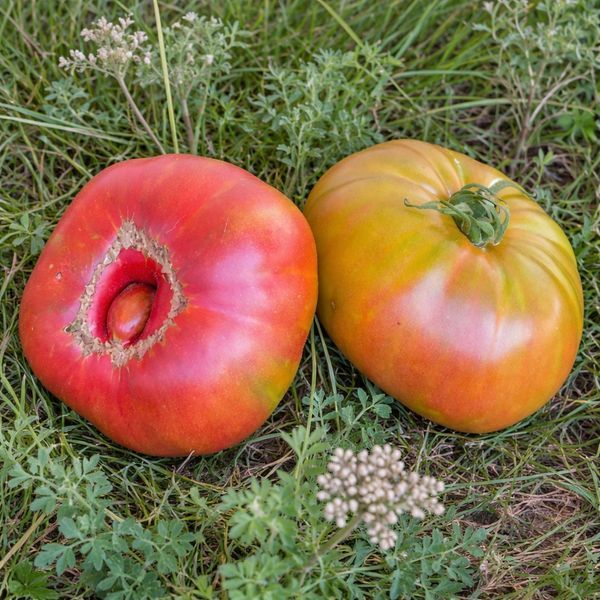
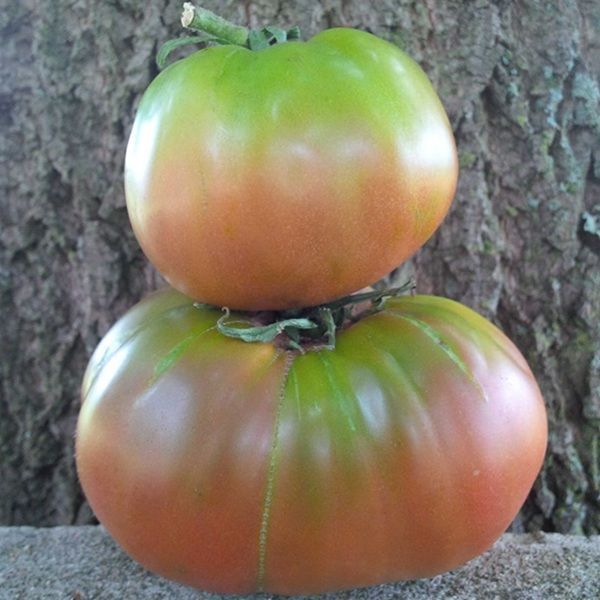
HAPPY CAPTAIN / CAPTAIN LUCKY, USA. The variety was created by Millard Murdock. This mid-early bicolor tomato is very popular and considered legendary thanks to its vividly colored flesh. The plants grow up to 1.5 meters tall, strong and vigorous. The fruits are large, about the size of a palm — I had ones weighing 500 g. and more! When pruned to 3 stems, the fruits become smaller.
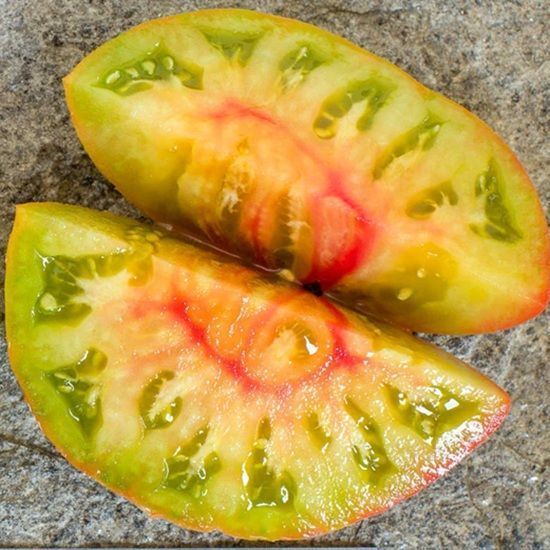
The fruit shape is flat-round, with a deep purple base color and yellow streaks. The flesh is rich and vibrant, with a bronze-red core and an oily texture. The taste is simply outstanding — spicy, sweet, very juicy, with a pronounced tomato-fruity aroma! Top marks across the board! One of the most striking varieties in my collection — highly recommended!
PURPLE TOMATO:
Tomatoes with purple coloration and a bicolor (two-tone) effect are very interesting and attractive. Bicolor means the presence of two distinct colors on the fruits, enhancing their visual appeal. Here are some examples of purple bicolor tomato types:
-
Purple-Gold Bicolor: a purple or cherry-red base with golden streaks, creating a beautiful bicolor effect.
-
Purple-Green Bicolor: fruits with a purple base and green stripes, providing an interesting and contrasting appearance.
-
Purple-Orange Bicolor: tomatoes with a purple-red base and orange spots or streaks, creating a beautiful contrast.
-
Purple-Black Bicolor: fruits with a purple-red or dark purple base and black hues.
-
Purple-Yellow Bicolor: fruits combining a purple or cherry-red coloration with yellow elements.
-
Purple-Pink Bicolor: fruits with a purple base and pink shades.
BUY HAPPY CAPTAIN SEEDS:
This variety can be confidently recommended to all lovers of such tomatoes. We have over two thousand seed varieties available. Wishing you good luck and great harvests! If you are interested in specific purple bicolor tomato varieties, we recommend checking our catalog. Please note that tomato varieties and their characteristics may vary depending on many factors, including geographic location, growing conditions, and specific hybrids.