
|
Quantity
|
Total
|
||
|
|
|||
|
|
|||
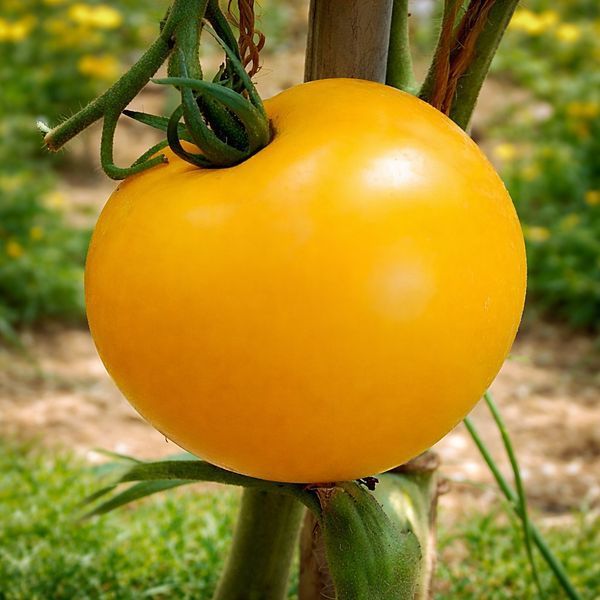
YELLOW PUDOVKA. A super variety among early yellow tomatoes. One of the first to start yielding and pleases with an abundance of even, bright fruits. The compact, neat bush and high productivity make it a real find for gardeners. The variety is semi-determinate, with a plant height of about 50 cm. The bushes are strong, compact, suitable for growing in open ground, greenhouses, on vertical and horizontal supports, as well as in large pots and containers. Thanks to its compactness, the variety can be successfully grown on balconies and terraces.
Early ripening: when planted in April, the first fruits ripen already in early June. It is distinguished by cold resistance, able to tolerate short-term temperature drops, however, with stable warmth, the yield is significantly higher. The fruits are round, even, shiny, weighing about 140 g. At full ripeness, they acquire a rich pure yellow color without spots or cracks. The tomatoes look bright, like little light bulbs on the bush. The skin is dense but not rough, does not crack either during storage or canning.
The flesh is bright yellow, dense, meaty, sugary, with a delicate fruity aftertaste. The high content of dry matter and sugars makes the variety especially suitable for baby and diet food. The fruits are of universal purpose: ideal for fresh salads, appetizers, garnishing dishes, vegetable assortments, whole-fruit canning, and drying. Thanks to their dense structure, they retain their shape well during processing. One of the best compact yellow varieties for a stable and beautiful result.
GROWING FEATURES:
Seeds are sown for seedlings from February to April in light, nutritious soil with the addition of superphosphate, potassium fertilizers, and wood ash. Sowing depth is up to 1 cm. Seedlings require good lighting and moderate watering with warm water. After the appearance of two true leaves, picking is carried out. Planting in a greenhouse or open ground is done in April–May in well-warmed soil.
It is recommended to water the holes with hot water before planting. The bushes are tied to a support; pruning is desirable, but a few lower side shoots can be left for additional harvest. During the flowering and fruit set period, regular watering with warm water and fertilizing with organic or mineral fertilizers at least twice a week are necessary. The soil should be regularly loosened, avoiding damage to the roots.