




|
Quantity
|
Total
|
||
|
|
|||
|
|
|||
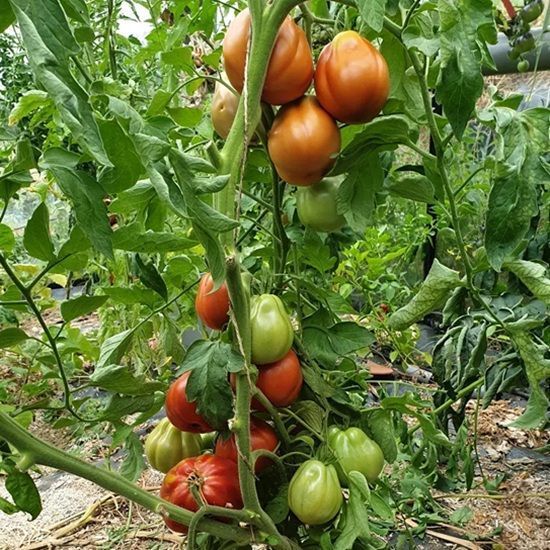
BEEF HEART FROM NICE (COEUR DE BOEUF DE NICE). The largest tomato of the season! An indeterminate variety that grows very tall — over 2 meters in open ground. The plant is strong and lush, with long, broad leaves that effectively shield the fruit clusters. Typically, each cluster carries 1–2 fruits — and what fruits they are! This is a heritage variety from Nice, passed down through generations. It’s known for vigorous growth and high productivity. Fruits are red, weighing between 180 and 300 grams, mostly pear-shaped, though fruit shapes can vary on the same plant. The flesh is very dense, with minimal seeds and gel, and a bright red hue. The interior is meaty and firm, with a marbled texture.
Some reports mention fruits reaching over 1 kg — we haven’t observed that ourselves. On a single plant, you may find fruits of different shapes: round-plum, heart-shaped, pear-like, ribbed or smooth. The color is deep red. When cut, fruits show nearly no hollows and contain few seeds. The flesh is dense, meaty, marbled, with a texture reminiscent of watermelon. The flavor is rich, predominantly sweet with a subtle tang. Main yield comes in the second half of the growing season. The taste is very pleasant, sweetish — easily a 5+. With proper care and attention, you can grow delicious and unique “Beef Heart” tomatoes right in your garden.
TOMATO GROWING GUIDE:
- Site selection and soil preparation: Choose a sunny location. The soil should be fertile, well-drained, and rich in organic matter.
- Sowing or transplanting: Start seeds in containers or plant ready seedlings. Transplant outdoors only after the danger of frost has passed.
- Plant support: Because “Beef Heart” fruits can be large, strong support is necessary — use stakes, nets, or other means.
- Watering and feeding: Keep soil consistently moist. Fertilize with tomato-specific nutrients to encourage growth and fruiting.
- Pruning and suckering: Remove unnecessary shoots and shape the plant to help it focus energy on fruit development.
- Pest and disease protection: Monitor plant health, check leaves regularly, and apply protective measures as needed.
- Harvesting: Pick fruits once they’re fully ripe and have reached their typical color and shape.